
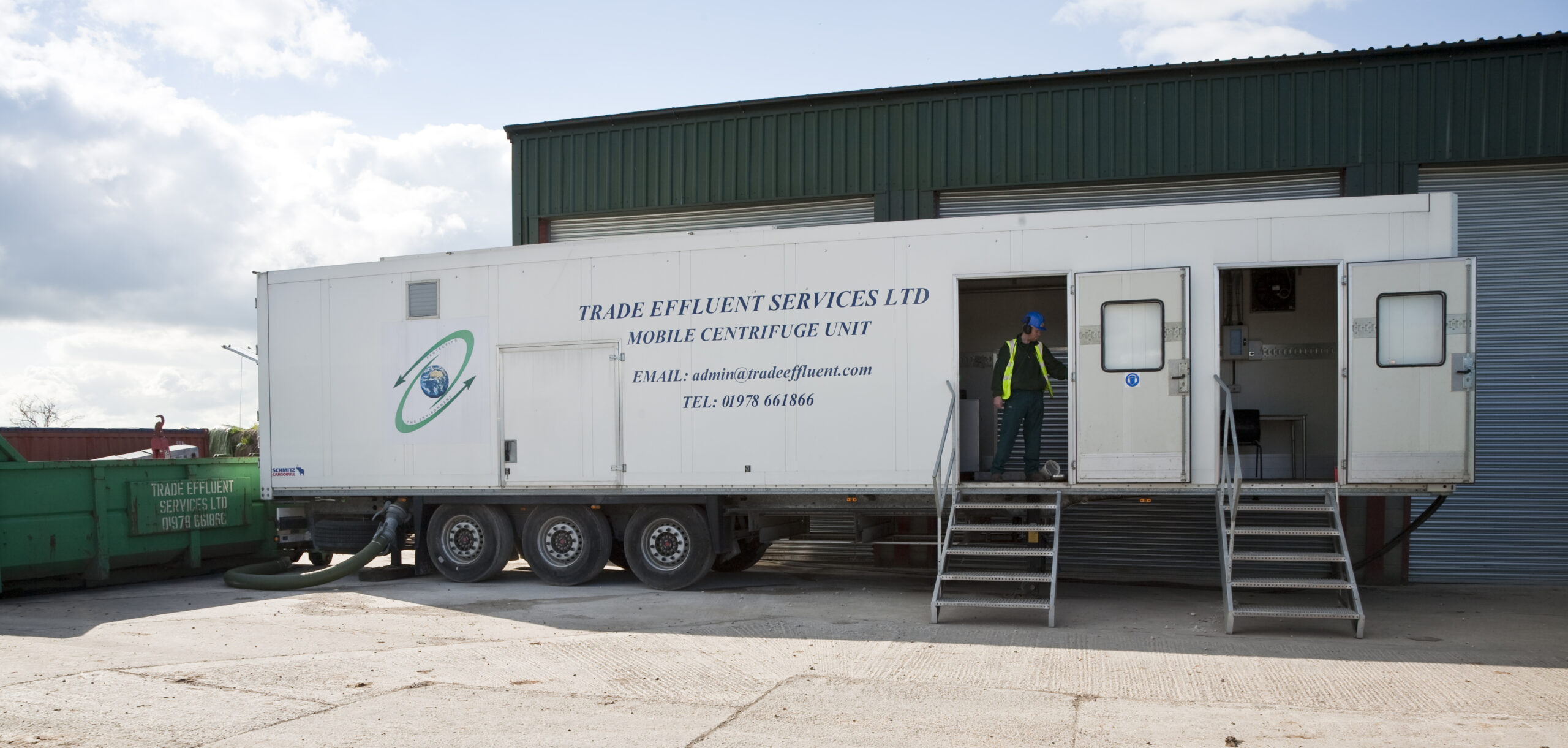
Mobile Centrifuge Hire & Sludge Dewatering
Trade Effluent Services provides operator-managed mobile centrifuge hire for industrial sludge, wastewater and other liquid-solid separation applications across the UK.
Our mobile decanter centrifuge systems can be deployed as temporary treatment capacity, during planned maintenance or plant failures, or as part of a larger sludge removal and dewatering project.
Rather than simply supplying the equipment, we can support the complete operation — from assessing the sludge and setting up the dewatering process through to handling the separated cake and centrate.
When Does Mobile Sludge Dewatering Make Sense?
Tankering liquid sludge is often the simplest solution, but it is not always the most efficient.
If a significant proportion of the material being transported is water, separating the solids on site can substantially reduce the volume requiring onward transport.
Mobile centrifuge dewatering can be particularly useful when:
- sludge production has increased beyond your existing treatment capacity;
- an on-site centrifuge, filter press or dewatering system is unavailable;
- planned maintenance or a shutdown requires temporary dewatering capacity;
- sludge has accumulated in tanks, lagoons or treatment infrastructure;
- frequent tanker movements are becoming operationally or commercially difficult;
- a temporary project does not justify investment in permanent dewatering equipment; or
- additional sludge processing capacity is needed for a defined period.
The right approach depends on the waste itself. Before recommending dewatering, we look at what the sludge contains, how much is being produced and what will happen to both the liquid and solid fractions after separation.
How Does a Decanter Centrifuge Work?
A mobile decanter centrifuge continuously separates suspended solids from liquid using centrifugal force.
Sludge is pumped from a holding tank into the rotating centrifuge bowl. Where required, polymer is introduced to improve the separation of fine solids. Inside the bowl, the heavier solids are forced outwards while an internal scroll conveys them towards the solids discharge.
This produces two separate streams:
Dewatered sludge cake — discharged from the centrifuge for collection, transport and appropriate recovery, treatment or disposal.
Centrate — the separated liquid fraction, which can be returned to the site’s treatment process, further treated, stored or managed through an agreed route.
The diagram below shows a typical mobile dewatering setup, including sludge feed, polymer dosing, the decanter centrifuge, centrate discharge and solids handling.
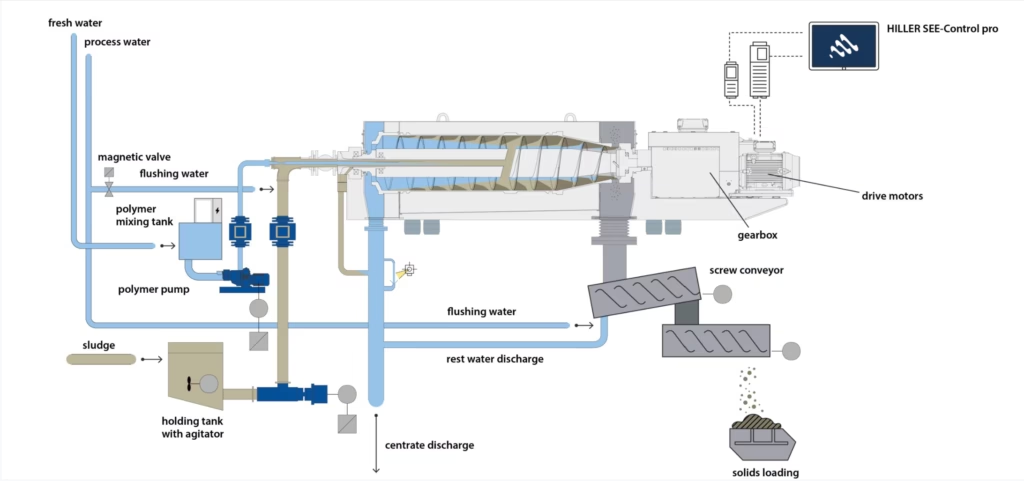
Our team takes care of delivery, setup, and commissioning — you don’t need to lift a finger.
More Than Centrifuge Hire
A successful dewatering project involves more than simply delivering a centrifuge to site.
Feed consistency, solids concentration, polymer selection, storage capacity, site infrastructure and the intended route for the separated materials can all affect how the system performs.
TES can support the wider dewatering process with experienced operators and additional equipment where required, including:
- Sludge feed pumps and pipework
- Polymer preparation and dosing
- Sludge screening and pre-treatment
- Temporary storage
- Cake handling and loading
- Tanker movements
- Bulk transport of dewatered material
- Recovery, treatment and disposal routes
This allows us to look at the complete sludge-management requirement rather than treating the centrifuge as an isolated piece of equipment.
📊 What You Can Expect
| Performance area | Typical figures* |
|---|---|
| Sludge throughput | 20–100 m³ per hour |
| Feed sludge solids content | 1 – 6% |
| Cake solids content | 20 – 28% dry solids |
| On-site setup time | less than 12 hours |
| Staffing | Fully operator-managed |
*Exact results depend on your sludge type and site conditions.
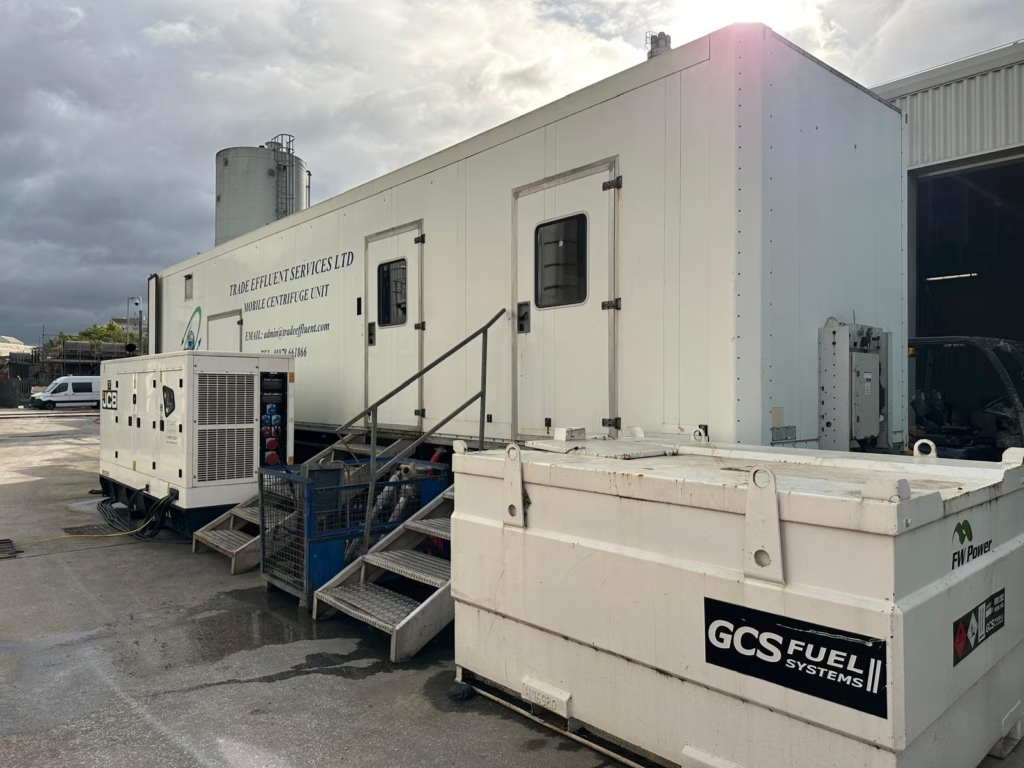
Real-World Example: Food Processing Site with High-Fat Effluent
A food processing company in the North West was struggling with a sudden increase in sludge production caused by seasonal demand and changes in their effluent profile. Their existing setup couldn’t keep pace, leading to excessive tanker callouts, rising disposal costs, and the risk of breaching their trade effluent consent.
They needed a high-throughput, reliable solution that could be deployed quickly and operated with minimal input from their team.
Our response:
We deployed a mobile centrifuge system based on an ANDRITZ ACZ-series decanter, complete with a polymer dosing unit and operator control station. Our team handled setup, configuration, and daily running of the equipment.
We optimised the system for the client’s waste stream — a high-fat, protein-rich sludge — by adjusting the bowl speed and polymer feed to maximise dryness without overconsumption of chemicals.
Results over a 6-week hire period:
- ✅ Sludge volumes reduced by over 60%, significantly lowering disposal costs
- ✅ Dry solids content regularly achieved 26–28%, outperforming previous methods
- ✅ Tanker movements cut by nearly half, easing pressure on logistics
- ✅ Full compliance maintained throughout with no consent breaches
- ✅ Operator time saved as no internal staff were needed to run the system
The client retained us for a second period of hire during their next peak production cycle — and have since explored long-term centrifuge support as part of their effluent strategy.
❓ Frequently Asked Questions
What is a decanter centrifuge used for?
It separates solids from liquids in sludge or slurry, reducing waste volume and disposal costs.
What kind of waste can it handle?
Nearly any industrial sludge—oily, fatty, high-strength or fibrous—in food processing, wastewater treatment, construction, etc.
How much sludge can it process?
Typically 15–100 m³ per hour; dependant on solids content. We adjust settings to suit your waste stream.
Do I need to operate the centrifuge?
No. Our service is fully operator-managed from setup to shutdown, with safe contractor approved operators.
How quickly can you mobilise?
Usually within 48–72 hours to most UK sites—sooner if it’s urgent.
Is the equipment self-contained?
Yes. It arrives containerised with all pumps, controls and safety features—just provide power and sludge feed.
Will this help with trade effluent compliance?
Yes. Better separation means lower sludge volumes and easier compliance with consent limits.
Can I hire it short-term?
Absolutely—anything from emergency cover to multi-month projects.
📞 Ready to Cut Sludge Costs?
Talk to our team today for a quick quote or site assessment.
👉 Contact us — we’ll get a system on the road and working for you, fast.
👉 Read the full “How It Works” guide